The Functional Coffee Market's Retail Turning Point: Why Everyday Dose's Target Launch Signals Category Maturation
AUSTIN, TX / ACCESS Newswire / December 8, 2025 / The functional beverage sector has been dealing with a credibility problem for years, and companies that actually deliver on their claims are finally getting the retail distribution they deserve. Everyday Dose's launch in 1,500 Target stores nationwide isn't just another brand expansion - it represents a market inflection point where retailers are betting that consumers can tell the difference between legitimate functional products and marketing hype.
The timing reflects what the data has been showing for months. According to Mordor Intelligence's functional beverage market analysis, the category is projected to reach $224.76 billion by 2030, with an 8.17% compound annual growth rate. But here's what's really interesting: the fastest growth is happening in segments where efficacy can be measured and repeat purchase rates are high, not in categories built purely on marketing claims.
What's Really Driving the Functional Coffee Opportunity
When you break down the numbers, functional coffee sits at the intersection of two major consumer trends that aren't going away. The broader functional coffee market is expected to hit $7.87 billion by 2030, growing at 11.84% annually. That's faster than traditional coffee, faster than most wellness categories, and it's being driven by consumers who've figured out that their regular coffee habit might be working against them.
The thing is, most people don't wake up thinking "I need more functional beverages in my life." They wake up wanting coffee. And a significant portion of them - research suggests about half the population based on genetic variations in caffeine metabolism - experience negative side effects from standard coffee consumption. Jitters, anxiety, gut issues, afternoon crashes. These aren't niche problems.
Grand View Research data shows that 44% of U.S. consumers are actively seeking functional beverages for daily consumption, with gut health and mental wellness being the primary drivers. What's changed in the past two years is that consumers are getting smarter about ingredient quality and dosing. They've been burned by products that promised benefits but delivered nothing measurable.
This explains why Target's vetting process has gotten so much more rigorous. Retailers watched the first wave of functional products generate initial interest but fail to maintain repeat purchase rates, and they're not interested in repeating that pattern. The brands getting retail distribution now are the ones that can prove their formulations work, not just claim they do.
The Competitive Landscape Is Messier Than It Looks
While competitors in the mushroom coffee space have taken different approaches, what sets companies like Everyday Dose apart isn't just their formulation - it's their understanding that the market needs products people can actually feel working. Most brands that launched during the 2020-2022 wellness boom either skipped real coffee entirely (alienating coffee lovers) or used such low doses of functional ingredients that any benefits were purely placebo.
The competitive dynamics are interesting because everyone's focused on customer acquisition, but the real battle is retention. Industry benchmarks for consumable CPG products show repeat purchase rates typically around 20-30%. Everyday Dose claims to have hit 60%+, which if accurate, suggests they've solved the efficacy problem that's plagued the category.
"We looked at how other companies were tackling this and realized they were missing the fundamental point," says Jack Klauber, founder and CEO of Everyday Dose. "The market doesn't need more coffee options - it needs coffee that works differently, that actually delivers on functional benefits without compromising on taste or ritual."
That positioning matters because according to Future Market Insights research, brands focusing on nootropic and gut-health-enhancing formulations are seeing the fastest adoption rates. Probiotic beverages alone now represent 32% of the functional beverage market share, indicating consumers are willing to pay premium prices for products targeting specific health outcomes.
The DTC to Retail Evolution Pattern
What's happening with Everyday Dose follows a pattern we've seen accelerate in the past few years. Build proof of concept through direct-to-consumer channels, demonstrate retention metrics that prove the product works, then use that data to secure retail partnerships. It's not a new strategy, but it's working better now because retailers have gotten burned by brands that looked good on paper but couldn't maintain velocity on shelves.
Deloitte's retail trends analysis notes that direct-to-consumer brands like Glossier hit $100 million in annual sales in their first year through wholesale partnerships after proving their model works. The key differentiator is demonstrating that customers come back - not just that they try the product once.
Target's decision to launch Everyday Dose nationwide rather than testing regionally signals confidence in the category's potential. The retailer has been selectively adding functional beverage brands, but most get tested in limited markets first. A nationwide launch from the start suggests Target's internal data shows demand exists across demographics and regions, not just in wellness-focused markets like California and New York.
Still, questions remain about margin sustainability. Lab testing every batch costs more than spot-checking. Premium ingredient sourcing costs more than using commodity-grade alternatives. And retail takes its cut, which squeezes margins further. The bet companies like Everyday Dose are making is that consumers will pay enough of a premium for quality that the economics work at scale.
Where This Market Is Actually Heading
The data tells an interesting story about where functional coffee fits in the broader beverage landscape. Market projections from Precedence Research show the functional beverages market growing from $158.05 billion in 2024 to $296.67 billion by 2034, with North America maintaining the largest market share. Coffee represents a particularly interesting opportunity within that growth because the consumption occasion is already established.
Unlike energy drinks (which created new consumption moments) or kombucha (which had to educate consumers on benefits), functional coffee doesn't need to convince people to drink it in the morning. It just needs to convince them to swap what they're already drinking for a version that does more. That's a much easier sell, especially when a significant portion of the market is already experiencing negative effects from traditional coffee.
"Where I see this industry heading is toward bifurcation," Savage explains. "You'll have commodity coffee on one end and truly functional coffee on the other, with less and less in the middle. Consumers are either optimizing for price or optimizing for how it makes them feel."
That prediction aligns with what Food Navigator's market analysis shows is happening globally. The functional coffee market hit $4.5 billion in 2024, with North America accounting for 69.27% of market share and showing no signs of slowing. The growth is being driven by consumers who've tried functional coffee, felt a noticeable difference, and stuck with it.
The Retail Validation Nobody Expected This Fast
What caught alot of industry observers by surprise wasn't that functional coffee was growing - that's been obvious for a while. What's surprising is how quickly major retailers decided to give the category serious shelf space rather than relegating it to the natural foods section. Target's move to launch Everyday Dose in 1,500 stores simultaneously suggests they're viewing functional coffee as ready for mass market, not as a specialty wellness product.
This matters because shelf placement drives discovery, and discovery drives trial, and trial (when the product actually works) drives repeat purchase. The functional coffee brands that secure premium placement in mainstream retailers over the next 18 months will likely dominate the category for years because they'll benefit from compounding discovery effects that smaller brands can't match.
The competitive response will be interesting to watch. Established coffee brands have the distribution and marketing budgets to compete, but they're hampered by supply chains built for volume and commodity pricing, not premium ingredients and lab testing. Smaller functional coffee startups have the quality focus but lack the capital to compete for retail placement against brands with proven track records.
"The timing makes sense because the market is finally ready for functional coffee that doesn't compromise," Savage says. "We're not just responding to current market needs - we're anticipating where coffee is going in the next five years."
Whether that prediction proves accurate depends on factors beyond any single company's control. Consumer willingness to pay premium prices. Retail willingness to maintain shelf space for slower-velocity but higher-margin products. Competitive responses from established players. Supply chain sustainability at scale.
But if the market data is reliable, and if consumer behavior follows the patterns we've seen in other wellness categories that made the jump from specialty to mainstream, functional coffee is about to get a lot more competitive. And a lot more interesting.
About Everyday Dose
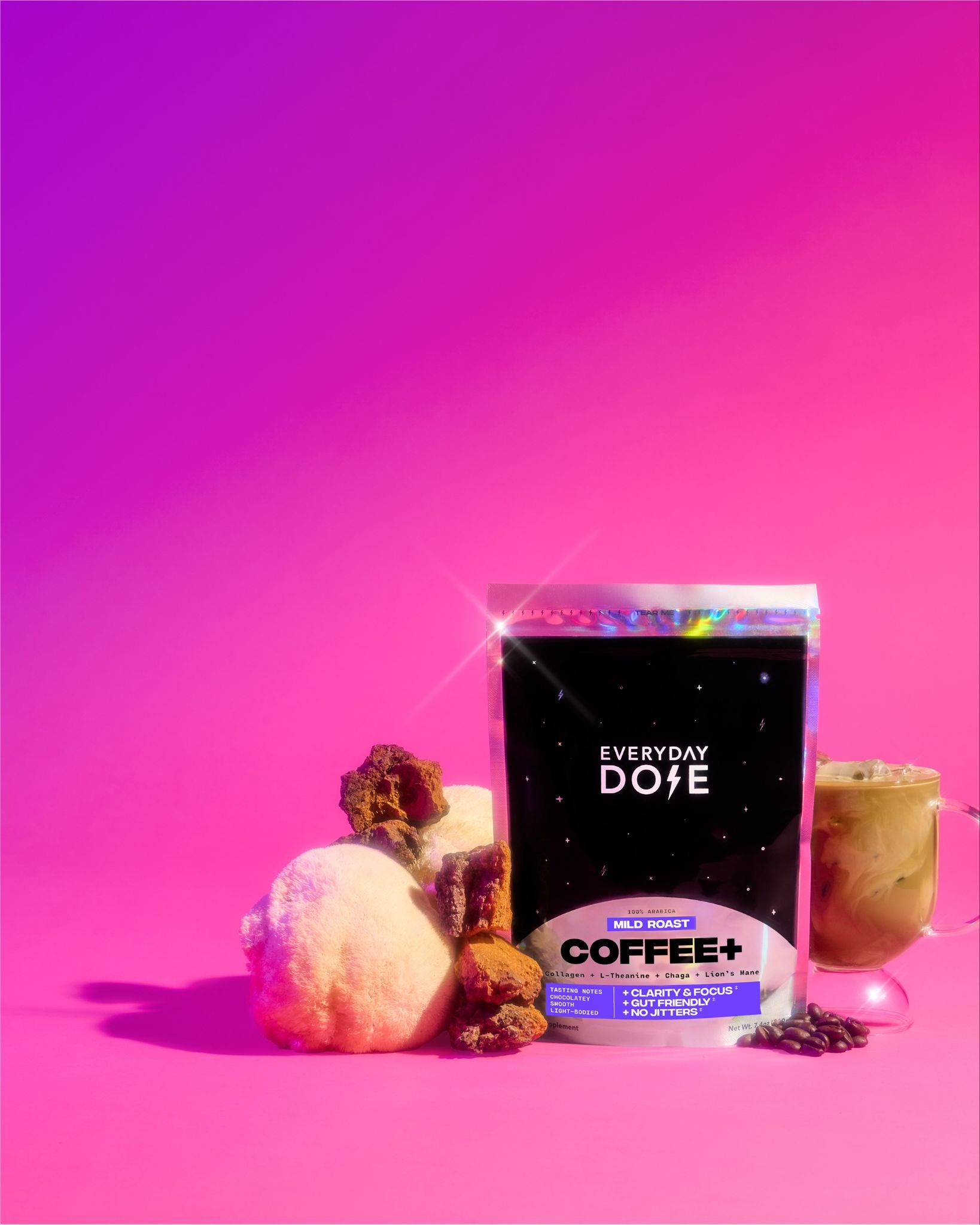
Everyday Dose crafts functional coffee combining lab-tested mushrooms (Lion's Mane and Chaga), nootropics, and collagen with lower-caffeine coffee designed to support focus and energy without the negative side effects of traditional coffee. Founded in 2020 in Austin, Texas, the company recently launched in 1,500 Target stores nationwide. More information is available at everydaydose.com or on Instagram @everydaydose.
Media Contact:
Jordan Leberman
Contact Email: [email protected]
Company Website: everydaydose.com
City: Austin, TX
SOURCE: Jordan Leberman
Information contained on this page is provided by an independent third-party content provider. XPRMedia and this Site make no warranties or representations in connection therewith. If you are affiliated with this page and would like it removed please contact [email protected]
