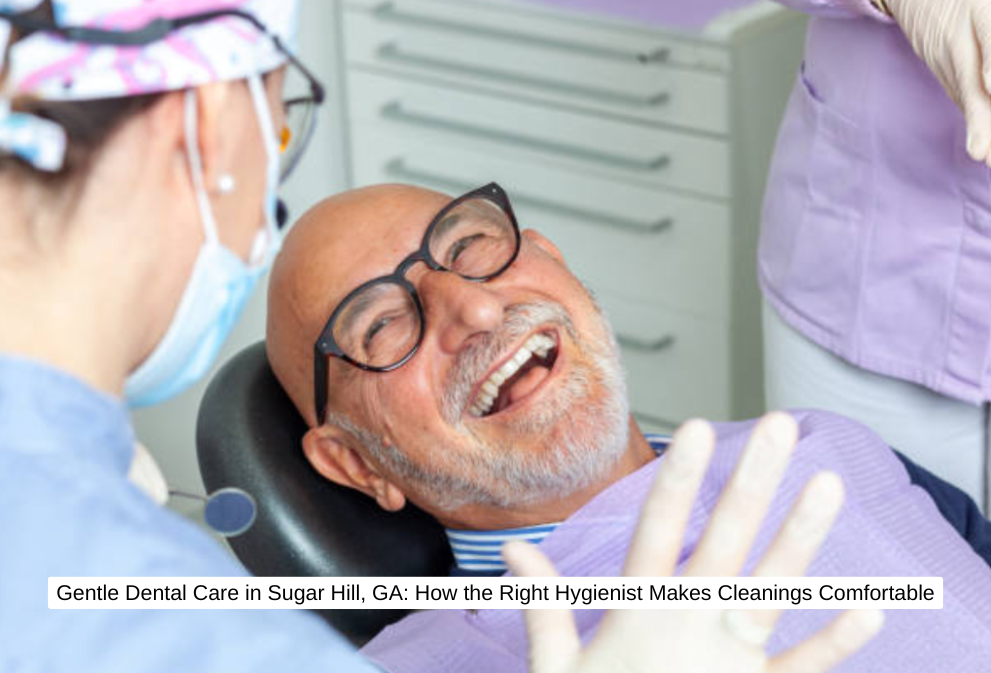

If you've been putting off your dental cleaning because the last one left you gripping the armrests, you're far from alone. Many people in Sugar Hill, GA and throughout Gwinnett County have learned to associate cleanings with discomfort. But a gentle dental care can completely change that experience.
The difference often comes down to technique, communication, and a practice philosophy that puts your comfort first. Here's what gentle dental care actually looks like and how to find it close to home.
Why So Many People Dread Dental Cleanings
The statistics tell the story. According to the Cleveland Clinic, dental anxiety affects roughly 36% of people, with about 12% experiencing severe fear. That translates to a lot of cancelled appointments and avoided care right here in Sugar Hill and surrounding communities like Buford and Cumming.
Past experiences shape expectations. Maybe a previous hygienist worked too quickly or applied too much pressure. Perhaps no one explained what was happening or checked in on how you were feeling. These experiences stick with you.
But here's what's worth knowing: the discomfort many people remember often comes from approach rather than the procedure itself. A hygienist trained in gentle dental techniques uses fundamentally different methods than one focused purely on efficiency.
What "Gentle Dental" Actually Means in Practice
You'll see "gentle" in plenty of dental marketing. But when a Sugar Hill, GA practice genuinely commits to gentle dental care, specific things happen differently.
Pressure control changes everything. Removing tartar buildup doesn't require aggressive force. A gentle dental hygienist uses lighter, more frequent strokes that accomplish the same cleaning without irritating sensitive gum tissue. The difference in how this feels is significant.
Pacing allows for responsiveness. Rushing through a cleaning means missing the signals you're sending. When you tense up, shift in the chair, or grip the armrest tighter, a gentle hygienist notices and adjusts. This requires working at a pace that allows for observation.
Communication builds partnership. Before any instrument touches your teeth, you know what's coming. "You'll feel some vibration here" or "This spot might be sensitive" prepares you rather than catching you off guard. This isn't just nice. It's a core component of gentle dental philosophy.
At Sugar Hill Corners Dentistry, this patient-first mindset shows up in every cleaning appointment. Their approach combines modern techniques with what they call "old fashioned hospitality," and that combination makes a real difference for anxious patients.
Specific Techniques That Reduce Discomfort
Beyond overall philosophy, certain technical choices distinguish gentle dental care from standard cleanings.
Ultrasonic scaling options. Modern ultrasonic instruments use vibration and water to break apart tartar, often causing less discomfort than traditional hand scaling. A skilled hygienist knows when each tool makes sense based on the area being cleaned and your sensitivity patterns.
Instrument angle precision. The angle at which a scaling instrument contacts your tooth determines how much pressure transfers to surrounding gum tissue. Proper angulation requires training and attention. When done right, you feel cleaning happening without that sharp, wincing sensation.
Anatomical awareness. Your mouth is unique. Tooth spacing, areas of gum recession, and individual sensitivity spots all affect how a cleaning should proceed. A gentle dental approach means adapting technique to your specific situation rather than applying a one-size-fits-all method.
Temperature management. Cold water hitting sensitive areas causes unnecessary discomfort. Many gentle dental practices use warmer water and direct spray carefully to avoid triggering sensitivity.
How Communication Transforms the Cleaning Experience
One hallmark of gentle dental care is what happens before instruments enter your mouth.
Thoughtful questions set the stage: Where have you experienced sensitivity before? Are there areas that worry you? Did anything hurt during your last cleaning? This information creates a roadmap for your appointment.
Dr. Andreia Nicola at Sugar Hill Corners Dentistry explains the philosophy: "Taking a few minutes to understand someone's concerns before we begin changes the entire dynamic. Patients who feel heard are already more relaxed, and that makes everything easier for everyone."
During the cleaning, communication continues. Simple check-ins like "How are you doing?" give you voice in the process. Many practices encourage hand signals too. Raise your hand if you need a pause, no explanation required.
This shifts the experience from something happening to you into something happening with your active participation. For many Sugar Hill, GA residents who've avoided the dentist for years, this shift alone can make regular care possible again.
What a Comfort-Focused Cleaning Looks Like
If rushed, uncomfortable cleanings are your only reference point, you might not know what a gentle dental experience includes:
Pre-cleaning conversation. Your hygienist reviews your history, asks about concerns, and explains what they'll do. These few minutes establish trust before anything else happens.
Strategic progression. Rather than starting with your most sensitive areas, a thoughtful hygienist often begins where you're less tender. This builds confidence that they're paying attention to your comfort.
Built-in pauses. Regular opportunities to close your mouth, swallow, and breathe prevent that overwhelmed feeling. You're not expected to hold still indefinitely.
Transparency about findings. Instead of silent note-taking that leaves you wondering what's wrong, a gentle dental hygienist shares observations. "Your gums look healthy in this area" or "There's some inflammation here we should monitor" keeps you informed.
Clear follow-up guidance. Before leaving, you understand what was done, any concerns, and what you can do at home. No mysteries, no surprises.
Finding Gentle Dental Care in Sugar Hill, GA
If you live in Sugar Hill or nearby areas like Buford, Cumming, or elsewhere in Gwinnett County, you have options when it comes to gentle dental care. Here's how to identify practices that genuinely prioritize comfort:
Look for specific mentions of comfort techniques. General claims about being "friendly" differ from specific descriptions of gentle approaches, sedation options, or anxiety accommodations.
Read reviews with comfort in mind. Look for reviewers who mention nervousness or past bad experiences. Their feedback about how the practice handled their concerns tells you more than generic positive reviews.
Call and ask questions. How does the practice accommodate anxious patients? What sedation options exist? How do hygienists approach sensitive areas? Practices committed to gentle dental care answer these questions readily.
Trust your initial interactions. How the front desk treats you, how questions are answered, and how concerns are received all indicate the practice's overall philosophy.
Sugar Hill Corners Dentistry offers various comfort options including sedation for patients who need additional support. Knowing options exist can reduce anxiety even if you don't end up needing them.
Tips for Patients Who Still Feel Anxious
Even with the gentlest dental care available, some people need extra strategies. These approaches help:
Name your anxiety out loud. Telling your hygienist "I get really nervous" provides useful information. It's not a burden. It helps them help you.
Consider appointment timing. If morning works better for you before daily stress accumulates, book morning slots. If you need mental preparation time, afternoons might suit you.
Bring distraction. Headphones with music or a podcast can help. Most practices welcome this.
Use breathing techniques. Slow breaths through your nose activate your body's relaxation response. According to the American Psychological Association, controlled breathing is one of the most effective immediate anxiety management tools.
Ask about all comfort options. From numbing gels to various sedation levels, gentle dental practices typically offer multiple supports. Understanding what's available gives you control.

When Gentle Dental Care Changes Your Relationship with the Dentist
Here's what happens when cleanings become comfortable: you actually keep your appointments. The American Dental Association emphasizes that regular professional cleanings are among the most effective ways to prevent gum disease and catch problems early.
When you're not avoiding the dentist for months or years, less tartar builds up between visits. Healthier gums mean less sensitivity. Less buildup means less intensive cleaning needed. The cycle becomes positive rather than dreaded.
For Sugar Hill, GA residents who've struggled with dental anxiety, finding genuinely gentle dental care can transform not just individual appointments but long-term oral health outcomes.
The right practice makes this possible. One where your concerns are heard, your comfort is prioritized, and your hygienist adapts to your needs rather than rushing through a checklist. That's what gentle dental care means in practice, and it's available right here in Sugar Hill.
Frequently Asked Questions
How do I find a gentle dental practice in Sugar Hill, GA?
Look for practices that specifically describe their comfort-focused approach, offer sedation options, and have reviews mentioning positive experiences from anxious patients. Calling ahead to ask about their approach to nervous patients also reveals a lot about their philosophy.
Will a gentle cleaning be as thorough as a regular cleaning?
Yes. Gentle dental techniques achieve the same thorough cleaning with different methods. Lighter pressure, better instrument angles, and appropriate pacing remove tartar and plaque just as effectively without causing unnecessary discomfort.
Is it okay to ask my hygienist to be more gentle during my cleaning?
Absolutely. Professional hygienists want you comfortable and appreciate feedback. Speaking up helps them adjust their technique and ensures you'll return for future care rather than avoiding appointments.
How often should I get cleanings if I have dental anxiety?
Most adults benefit from cleanings every six months. Interestingly, more frequent visits often mean more comfortable experiences because there's less buildup to address each time. Discuss the right schedule with your Sugar Hill dentist based on your specific situation.
What sedation options exist for dental cleanings?
Options range from nitrous oxide (laughing gas) to oral sedation to IV sedation for those with severe anxiety. A gentle dental practice like Sugar Hill Corners Dentistry can discuss which option might work best for your needs.
Can I request the same hygienist for every appointment?
Yes, and many patients do. Once you find someone whose gentle approach works for you, asking to schedule with them consistently helps ensure reliably comfortable care.