CollisionHelp.org today announced the official launch of its groundbreaking digital platform designed to assist vehicle accident victims across all 50 United States. The innovative service combines cutting-edge artificial intelligence technology with comprehensive educational resources to help accident victims understand their rights, assess vehicle damage, and navigate the often-overwhelming insurance claims process—all at no cost to users.
The launch of CollisionHelp.org addresses a critical gap in the automotive accident recovery ecosystem. Each year, millions of Americans find themselves involved in vehicle collisions, facing a maze of insurance paperwork, repair decisions, and potential legal considerations. For most, this represents unfamiliar territory where insurance companies hold a significant informational advantage. CollisionHelp.org was created to change that dynamic fundamentally.
"When someone is involved in a car accident, they're often dealing with physical injuries, emotional trauma, and the stress of wondering how they'll get their vehicle repaired or replaced," said a spokesperson for CollisionHelp.org. "The last thing they need is to feel overwhelmed by insurance company tactics or confused about their legal rights. Our platform puts powerful tools and knowledge directly in the hands of accident victims, helping them make informed decisions during one of the most challenging times of their lives."
Introducing the AI Damage Analyzer: A Game-Changing Tool for Accident Victims
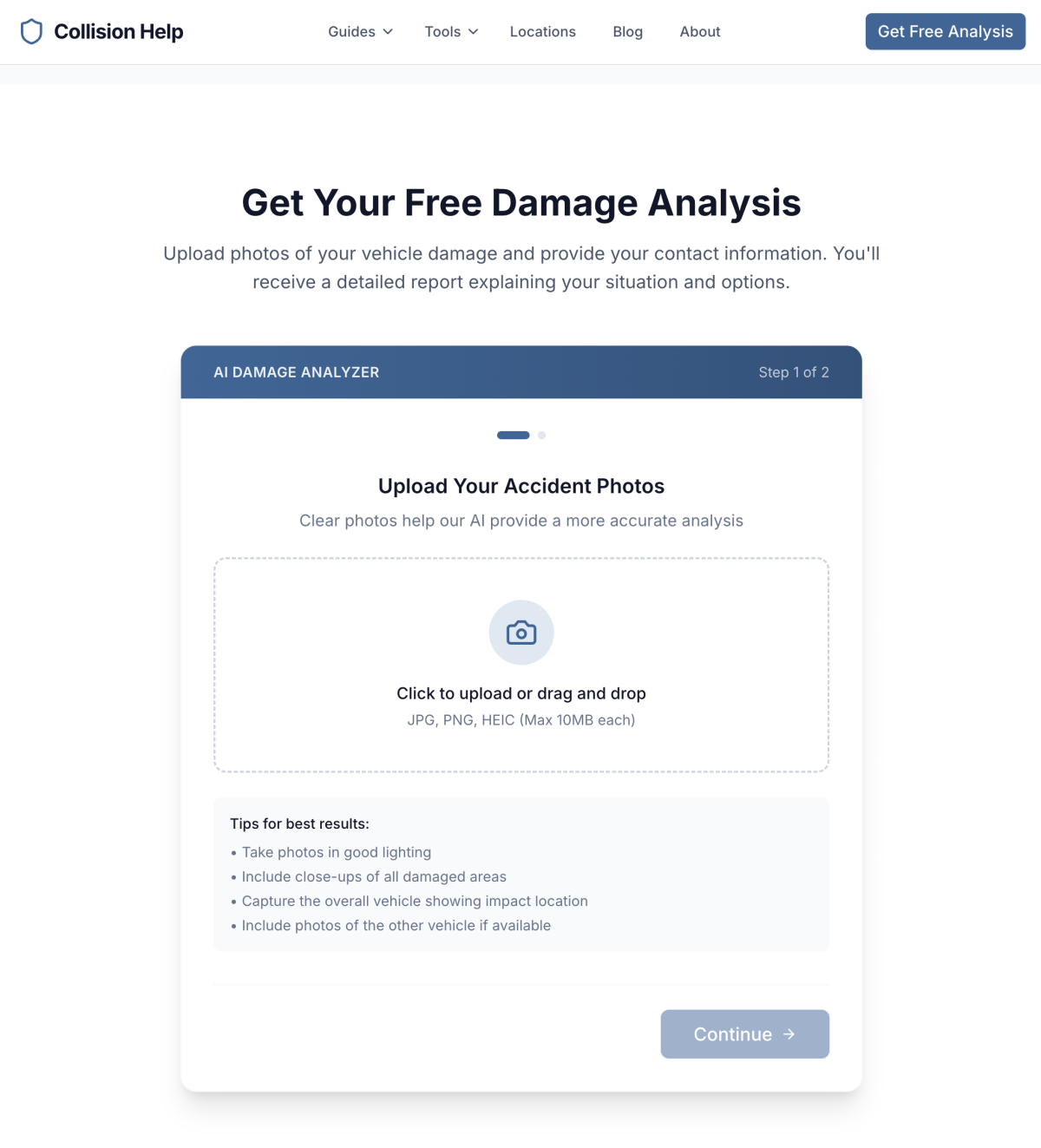
At the heart of CollisionHelp.org's innovative approach is the AI Damage Analyzer, a sophisticated artificial intelligence system that enables accident victims to receive a preliminary assessment of their vehicle damage simply by uploading photographs. This technology represents a significant advancement in how individuals can understand and document their accident-related losses.

The AI Damage Analyzer operates through a straightforward three-step process that delivers results within minutes:
Step One: Photo Upload
Users submit clear photographs of their vehicle damage from multiple angles. The system is designed to work with standard smartphone cameras, making it accessible to virtually anyone with a mobile device. The platform provides guidance on how to capture the most useful images, including recommendations for lighting, angles, and specific areas of damage to document.
Step Two: AI Analysis
Once photographs are uploaded, CollisionHelp.org's proprietary artificial intelligence system examines the images with remarkable precision. The AI has been trained on thousands of accident cases, enabling it to identify impact patterns, assess damage severity, and evaluate fault indicators based on the visible evidence. This analysis considers factors that professional adjusters and accident reconstruction experts typically examine, including point of impact, depth of damage, secondary damage areas, and collision mechanics.
Step Three: Comprehensive Report Generation
Within 5-10 minutes of upload, users receive a detailed report via email. This report includes an assessment of case strength, estimated repair cost ranges, information about injuries commonly associated with similar accidents, and an overview of potential legal options. The report is designed to be both comprehensive and accessible, providing users with actionable information they can use in discussions with insurance companies, repair shops, and legal professionals.
"Insurance companies have teams of adjusters and lawyers working on their behalf," explained the CollisionHelp.org team. "Our AI Damage Analyzer helps level the playing field by giving accident victims access to sophisticated analysis tools that were previously available only to industry insiders. Now, anyone can get a preliminary understanding of their situation within minutes of an accident."
The AI Damage Analyzer represents a significant technological achievement in the consumer advocacy space. By democratizing access to damage assessment tools, CollisionHelp.org empowers individuals to enter negotiations with insurance companies armed with objective analysis rather than uncertainty.
Nationwide Coverage: Supporting Accident Victims Across All 50 States
CollisionHelp.org's commitment to accessibility extends to its geographic reach. The platform provides comprehensive coverage across all 50 United States, with state-specific resources that account for the significant variations in insurance requirements, fault systems, and statutory limitations that exist from state to state.
The platform's location-based resources are organized into five major regions:
Northeast Region
Connecticut, Delaware, Maine, Maryland, Massachusetts, New Hampshire, New Jersey, New York, Pennsylvania, Rhode Island, and Vermont. This region includes several no-fault insurance states, and CollisionHelp.org provides detailed guidance on how no-fault systems affect accident claims and recovery options.
Southeast Region
Alabama, Arkansas, Florida, Georgia, Kentucky, Louisiana, Mississippi, North Carolina, South Carolina, Tennessee, Virginia, and West Virginia. The Southeast represents a diverse mix of insurance systems, and the platform addresses the specific requirements and opportunities available to accident victims in each state.
Midwest Region
Illinois, Indiana, Iowa, Kansas, Michigan, Minnesota, Missouri, Nebraska, North Dakota, Ohio, South Dakota, and Wisconsin. The Midwest includes states with varying approaches to fault determination and insurance requirements, and CollisionHelp.org provides tailored guidance for each jurisdiction.
Southwest Region
Arizona, New Mexico, Oklahoma, and Texas. This rapidly growing region presents unique considerations for accident victims, including variations in minimum coverage requirements and comparative negligence rules.
West Region
Alaska, California, Colorado, Hawaii, Idaho, Montana, Nevada, Oregon, Utah, Washington, and Wyoming. The Western states include some of the nation's most populous markets and present diverse regulatory environments that CollisionHelp.org addresses through state-specific content.
For each state, CollisionHelp.org provides detailed information about insurance requirements, fault systems, statute of limitations, and other critical factors that affect an accident victim's rights and options. This localized approach ensures that users receive relevant, actionable information regardless of where their accident occurred.
"We recognized early in our development process that a one-size-fits-all approach wouldn't serve accident victims effectively," noted the CollisionHelp.org development team. "Insurance law varies dramatically from state to state. A rear-end collision in Michigan has different legal implications than the same accident in California. Our platform accounts for these differences, providing users with information that's specifically relevant to their situation and location."
Comprehensive Educational Resources: The Accident Injuries Guide
Beyond its technological innovations, CollisionHelp.org has developed an extensive library of educational resources designed to help accident victims understand every aspect of their situation. Among the most valuable of these resources is the comprehensive Car Accident Injuries Guide, which provides in-depth information about the medical and insurance implications of accident-related injuries.
The guide addresses a critical knowledge gap that affects many accident victims. Studies have shown that many individuals involved in vehicle collisions fail to seek appropriate medical attention immediately following an accident, often because they don't realize the extent of their injuries. Adrenaline and shock can mask pain and symptoms, leading individuals to believe they're uninjured when, in fact, they may have suffered significant damage.
"Adrenaline masks pain, and injuries like whiplash often don't appear for 24-72 hours," the guide explains. "This delayed onset of symptoms is one of the most common reasons accident victims fail to receive appropriate compensation for their injuries. They don't realize they're hurt until days later, and by then, they may have already made statements to insurance companies or signed documents that compromise their claims."
The Accident Injuries Guide covers 11 comprehensive articles organized into two main sections, addressing topics including:
Common Collision Injuries
An overview of the types of injuries most frequently associated with vehicle accidents, including soft tissue injuries, fractures, head trauma, and spinal damage. This section helps readers understand what to look for and when to seek medical attention.
Delayed Symptoms
Detailed information about injuries that may not manifest immediately, including the typical timeline for symptom emergence and guidance on monitoring one's condition in the days following an accident.
Whiplash and Treatment Options
Whiplash remains one of the most common and frequently misunderstood accident injuries. The guide provides comprehensive information about whiplash mechanics, symptoms, treatment protocols, and long-term implications.
Back Injuries and Documentation
Back injuries can have lasting consequences for accident victims. This section addresses the importance of proper documentation, treatment options, and the relationship between back injuries and insurance claims.
Traumatic Brain Injuries (TBI)
Even seemingly minor accidents can result in traumatic brain injuries. The guide provides critical information about TBI symptoms, the importance of proper diagnosis, and the long-term considerations associated with brain injuries.
Broken Bones and Fractures
Information about fracture types, treatment timelines, and the documentation required to support insurance claims related to broken bones.
Soft Tissue Injuries
Soft tissue injuries are often dismissed by insurance companies as minor, but they can have significant long-term effects. This section helps readers understand the true nature of soft tissue damage and how to ensure it's properly documented and compensated.
Psychological Trauma and PTSD
Vehicle accidents can have profound psychological effects that extend far beyond physical injuries. The guide addresses post-traumatic stress disorder, anxiety, and other psychological conditions that may result from accidents.
Pain and Suffering Compensation
Understanding how insurance companies evaluate pain and suffering claims is essential for accident victims seeking fair compensation. This section explains the factors that influence these assessments and how to document non-economic damages effectively.
Personal Injury Protection (PIP)
The guide provides detailed information about PIP coverage, which covers medical expenses regardless of fault in many states. With typical coverage ranging from $10,000 to $50,000, understanding PIP benefits is essential for accident victims.
Pre-existing Conditions
Many accident victims worry that pre-existing medical conditions will prevent them from receiving compensation for accident-related injuries. The guide explains the "eggshell plaintiff" doctrine, which allows individuals to recover compensation when accidents aggravate existing conditions.
Beyond Technology: A Comprehensive Support Ecosystem
While the AI Damage Analyzer represents CollisionHelp.org's most visible technological innovation, the platform offers a complete ecosystem of support for accident victims. This includes:
Case Evaluation Services
Users can complete a detailed questionnaire about their accident and vehicle, enabling the CollisionHelp.org team to provide personalized guidance tailored to their specific situation. This human element complements the platform's AI capabilities, ensuring that users receive comprehensive support.
Expert Guidance and Roadmaps
Based on the information provided through case evaluations and AI analysis, CollisionHelp.org creates personalized roadmaps that guide users through the insurance claims or repair process. These roadmaps break down complex procedures into manageable steps, helping users understand what to expect and how to proceed at each stage.
24-Hour Response Commitment
CollisionHelp.org has committed to responding to user inquiries within 24 hours, ensuring that accident victims receive timely support when they need it most.
Data Security and Privacy
Understanding that accident-related information is inherently sensitive, CollisionHelp.org employs robust data encryption to protect user information. The platform has been designed with privacy as a foundational principle, ensuring that users can share their information with confidence.
No-Obligation Model
All initial evaluations and consultations through CollisionHelp.org are provided at no cost and with no obligation. Users can access the platform's resources, receive AI analysis, and obtain guidance without any financial commitment. This approach ensures that cost is never a barrier to accessing critical information and support.
Addressing the Full Spectrum of Accident Scenarios
CollisionHelp.org recognizes that vehicle accidents encompass a wide range of situations, each with its own considerations and challenges. The platform provides specialized guidance for numerous accident types, including:
Total Loss Disputes
When an insurance company declares a vehicle a total loss, the offered settlement often falls short of the vehicle's true value. CollisionHelp.org provides resources and tools to help accident victims understand their options and advocate for fair compensation.
Insurance Claims Navigation
The insurance claims process can be intimidating and confusing. CollisionHelp.org breaks down this process into understandable components, helping users understand their rights, document their claims effectively, and communicate with insurance adjusters from a position of knowledge.
Repair Rights
Many accident victims don't realize they have the right to choose their own repair shop and don't have to accept an insurance company's preferred provider. CollisionHelp.org educates users about their repair rights and helps them make informed decisions about vehicle restoration.
Fault Determination
Understanding how fault is determined in an accident is essential for protecting one's rights and maximizing recovery. CollisionHelp.org provides resources explaining fault determination processes and how different fault scenarios affect insurance claims.
Rear-End Collisions
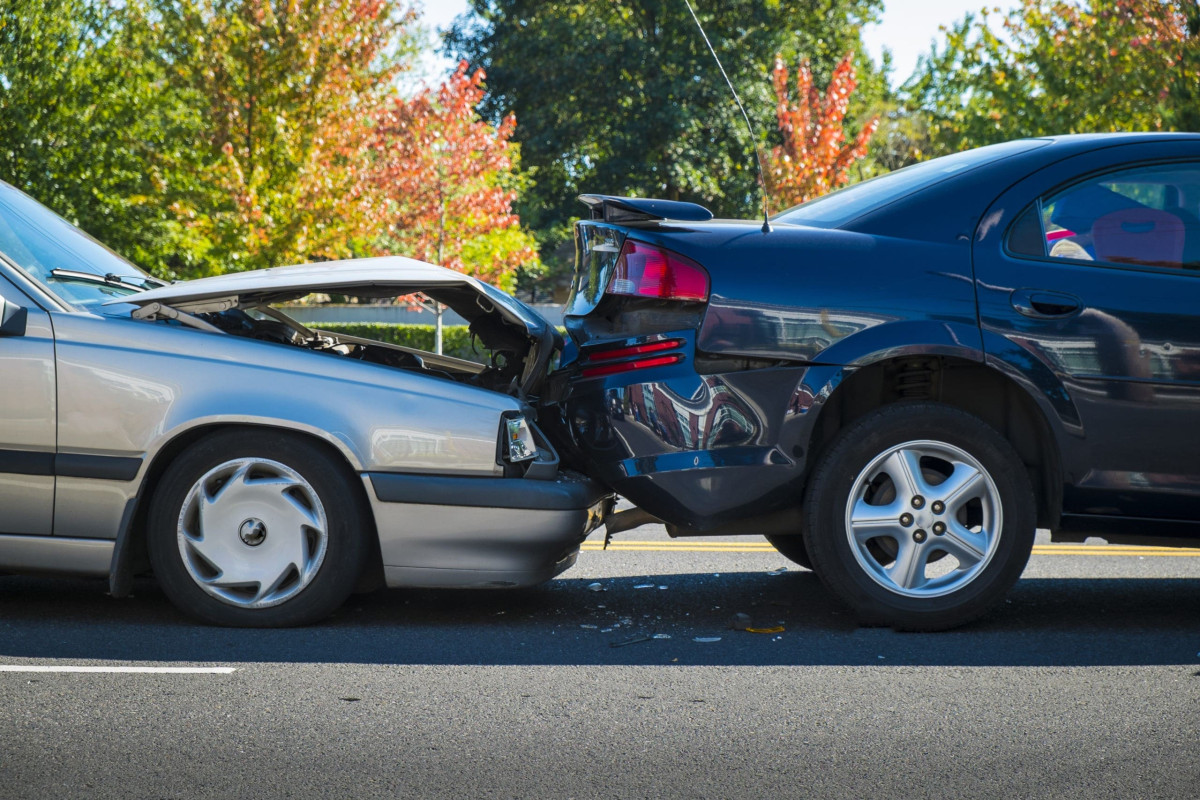
Rear-end accidents are among the most common types of collisions and carry specific legal presumptions that can benefit accident victims. The platform provides specialized guidance for this accident type.
Commercial Vehicle Incidents
Accidents involving commercial vehicles—including trucks, delivery vans, and company cars—present unique considerations related to insurance coverage, liability, and potential damages. CollisionHelp.org addresses these complexities through dedicated resources.
Accident-Related Injuries
As detailed in the comprehensive Accident Injuries Guide, CollisionHelp.org provides extensive information about the medical and insurance implications of collision-related injuries.
A Response to Industry Imbalance
The launch of CollisionHelp.org represents a direct response to the significant power imbalance that exists between individual accident victims and insurance companies. Large insurers employ teams of adjusters, attorneys, and claims specialists whose expertise is focused on minimizing payouts. Individual accident victims, by contrast, typically have limited experience with the claims process and may not understand their rights or options.
"We've seen too many cases where accident victims accepted settlements far below what they deserved simply because they didn't know any better," explained the CollisionHelp.org team. "Insurance companies count on this knowledge gap. Our platform is designed to close that gap by giving accident victims access to the same types of analytical tools and information that were previously available only to industry professionals."
This democratization of information and analytical capabilities represents a fundamental shift in how individuals can approach accident recovery. Rather than entering negotiations at a disadvantage, users of CollisionHelp.org can approach insurance companies with a clear understanding of their situation and their rights.
The Future of Accident Recovery Support
The launch of CollisionHelp.org marks the beginning of an ongoing commitment to innovation in the accident recovery space. The platform's development team has indicated plans for continued enhancement and expansion of services, including:
Ongoing AI Refinement
The AI Damage Analyzer will continue to improve as it processes more cases and receives feedback from users. This continuous learning approach ensures that the system becomes more accurate and comprehensive over time.
Expanded Educational Resources
CollisionHelp.org plans to continue developing its library of guides, articles, and tools to address emerging topics and user needs.
Enhanced State-Specific Content
As insurance regulations and requirements evolve, the platform will update its state-specific resources to ensure continued accuracy and relevance.
Community Development
CollisionHelp.org envisions developing community resources that allow accident victims to share experiences and support one another through the recovery process.
Availability and Access
CollisionHelp.org is available now to users throughout the United States at no cost. The platform can be accessed from any internet-connected device, including smartphones, tablets, and computers. No registration is required to access educational resources, and the AI Damage Analyzer is available to all users free of charge.
To learn more about CollisionHelp.org and its services, visit the following resources:
- Main Website: https://www.collisionhelp.org
- AI Damage Analyzer: https://www.collisionhelp.org/ai-damage-analyzer
- Location-Specific Resources: https://www.collisionhelp.org/locations
- Car Accident Injuries Guide: https://www.collisionhelp.org/guides/accident-injuries