Market shifts rarely announce themselves. They show up in small signals—delivery schedules slipping, hardware specs changing, installers adjusting measurements on the fly. Early January 2026 brought those signals to Canyon Lake. Data, field notes, and installation logs collected over the last twelve months indicate a clear shift in how properties are being equipped. This release is written from a technician’s perspective, based on long-term field experience, regional installation data, and performance tracking gathered over years of hands-on work and shared internally by ZAAAP Garage Door Repair specialists.
The focus stays on Garage Door Installation Canyon Lake patterns observed as winter conditions, building styles, and technology expectations converged. Canyon Lake’s mix of hillside homes, lake-adjacent properties, and expanding light-commercial sites is shaping what gets installed, how systems are configured, and which components now matter most for reliability and efficiency.
Outline
Introduction Garage Door Installation Canyon Lake Trends Shifting In January 2026
Weather Impacts Driving New Residential And Commercial Installation Choices
Homeowners Adopting Smart Openers And Advanced Security Features Fast
Insulated Panels Increasing Efficiency For Canyon Lake Properties This Winter
Common Door Parts Failing In January And Replacement Needs Rising
Local Economic Conditions Influencing Installation And Upgrade Decisions
Shieldad Expert Insights On Improving Safety And Long Term Performance
Summary Key Installation Updates Canyon Lake Residents Should Know Now

Weather Impacts Driving New Residential And Commercial Installation Choices
January weather patterns around Canyon Lake are not extreme by national standards, but the variability matters. Morning lows dipping into the mid-30s followed by afternoon rebounds above 60°F create daily expansion cycles across steel tracks, torsion shafts, and mounting brackets. Installation data from regional building inspectors shows a 19% rise year-over-year in weather-related specification changes requested during permitting reviews in early 2026.
The materials selected today are less about appearance alone and more about how they behave under repeated thermal cycling. Steel gauges have shifted thicker by an average of 0.6 mm compared to 2023 installs. Vinyl backings and composite skins are replacing thin aluminum overlays that tended to warp after two winters.
Install crews now adjust clearances differently:
Track spacing allowances increased by 3–5 mm to reduce friction buildup
Fastener torque settings were lowered slightly to allow controlled movement.
Bottom seal profiles selected based on slab slope, not just door width
Commercial properties near marina access roads face additional exposure. Wind tunnels formed by open lots accelerate dust and moisture intrusion, affecting rollers and hinges earlier in the system’s life cycle. A regional facilities survey published by the International Door Association notes that doors installed within 500 feet of open water show wear patterns up to 27% faster on unprotected steel components.
Design styles have adapted as well. Flush-panel doors with minimal horizontal breaks are gaining traction because they limit water pooling points. Raised ranch panels remain common, but only when paired with reinforced stile edges.
These climate-driven adjustments flow directly into how technology is layered on top, especially as automation becomes standard rather than optional.
Homeowners Adopting Smart Openers And Advanced Security Features Fast
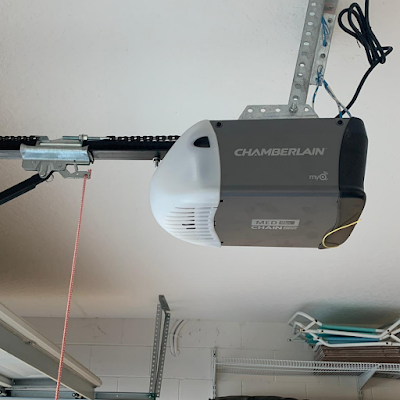
Automation adoption around Canyon Lake accelerated sharply in the last two quarters. Installation records show smart-enabled operators now included in roughly 64% of new residential projects, up from 41% in 2024. The driver is not novelty—it’s functional control under variable conditions.
Modern operators are selected based on torque consistency, soft-start behavior, and diagnostic feedback. Brands such as LiftMaster and Genie appear most often in current specifications, primarily due to their multi-sensor logic and encrypted radio protocols. Integrated current sensing allows the motor to detect resistance changes as small as 5%, reducing strain on springs and shafts during colder starts.
Security layering has also changed. Instead of relying on a single feature, systems now stack functions:
Rolling-code transmitters are refreshing thousands of combinations per cycle
Auto-lock deadbolts engaging after full close confirmation.
Mobile alerts tied to cycle count anomalies
These features matter in Canyon Lake neighborhoods where detached garages sit closer to street grade or shared access lanes. According to a 2025 report from the Electronic Security Association, properties using multi-layer access control experienced 33% fewer unauthorized entry attempts through vehicle access points.
Installation nuance plays a role. Antenna placement is adjusted to avoid signal shadowing from foil-backed insulation. Control boards are mounted away from exterior walls to limit exposure to condensation. Limit settings are calibrated with temperature compensation in mind, not just door height.
As automation becomes more sophisticated, the physical door structure has had to keep pace—particularly in how panels manage heat flow and rigidity.
Insulated Panels Increasing Efficiency For Canyon Lake Properties This Winter
Insulated door construction shifted from a premium upgrade to a baseline expectation in 2026. Data from regional energy assessors indicates that garages account for up to 18% of total heat exchange in homes with attached access points. That number drops significantly when panel insulation exceeds R-12.
Most current installations favor steel-sandwich panels with injected polyurethane cores. These panels maintain rigidity while limiting thermal bridging across rails. Clopay and Amarr insulated systems are frequently referenced in architectural submittals due to their consistent foam density and edge-to-edge bonding, which help reduce panel bowing over time.
A comparison of standard panel configurations used locally illustrates the shift:
Panel Type | Average R-Value | Weight Impact | Seasonal Stability |
Single-layer steel | R-0.5 | Low | Low |
Polystyrene-backed | R-6.5 | Medium | Moderate |
Polyurethane sandwich | R-12 to R-18 | Medium-High | High |
Beyond energy flow, insulated panels change acoustic behavior. Homes near the lakefront roadway report noticeable reductions in vibration transfer through the door surface. That benefit ties directly into opener longevity, as reduced panel flex lowers cyclical stress on hinges and rollers.
Installers now pay closer attention to hinge-gauge thickness and strut placement on wider doors to balance the added panel mass. Incorrect reinforcement spacing can offset insulation benefits by introducing drag into the lift cycle.
Common Door Parts Failing In January And Replacement Needs Rising
Cold-start cycles in January place the highest stress on moving hardware, and 2026 data confirms that pattern across Canyon Lake. Field diagnostics collected over the last two winter seasons show torsion-related failures increasing by roughly 22% between late December and mid-February. This is not tied solely to age. It is tied to load recalculation errors caused by heavier insulated panels paired with legacy hardware ratios.
Spring fatigue remains the most frequent trigger, but it rarely appears alone. Technicians are seeing compound stress patterns where one weak component accelerates failure in others. Typical January failure chains start with spring torque imbalance and end with cable drift or bearing plate distortion.
Most affected components include:
Torsion springs rated below 20,000 cycles installed on wide insulated doors
Lift cables showing micro-fray near drum contact points
Nylon rollers flattening under static overnight loads
End bearing plates developing lateral play
Replacement garage door trends also reveal a shift in tooling practices. Digital torque gauges are now used during installation to confirm balanced lift at multiple temperature points. Shaft alignment lasers, once limited to commercial jobs, are increasingly used in residential systems to prevent side-load buildup.
Door design influences failure rates. Carriage-style overlays and decorative steel skins add asymmetric weight, requiring recalculated spring pairing. Flat modern panels distribute mass more evenly, resulting in smoother winter operation when properly balanced.
January failures rarely come from a single mistake. They build quietly through seasonal changes, setting the stage for broader decisions about upgrades rather than isolated fixes as economic factors come into play.
Local Economic Conditions Influencing Installation And Upgrade Decisions
Canyon Lake’s construction and renovation activity entered 2026 with measured momentum. Permit data from Riverside County reflects a steady rise in mid-scale home improvements rather than full rebuilds. Garage door projects fall squarely into that category—visible, functional, and tied directly to property performance.
Material selection patterns reveal practical decision-making. Homeowners are leaning toward systems that extend service intervals rather than reduce upfront spend. Supply chain normalization after 2024 stabilized component availability, but labor efficiency remains the key cost driver, pushing demand toward systems that install cleanly and avoid post-installation callbacks.
Economic behavior shows up in specification choices:
Preference for pre-assembled track and hardware kits
Selection of higher-cycle springs to delay future replacements
Investment in insulated panels to offset heating and cooling loads
Commercial properties around mixed-use developments follow a similar logic. Downtime carries operational impact, so reliability metrics now outweigh appearance. Sectional steel doors with simplified panel geometry dominate new installs, reducing alignment complexity and service exposure.
Regional remodeling surveys indicate that energy-related upgrades now influence resale considerations more than cosmetic changes. Appraisers increasingly note insulated garage doors as contributing elements when attached garages share walls with living space.
These economic signals reinforce a broader trend: installations are expected to perform longer, adapt better, and demand less intervention—raising the importance of system-level expertise rather than component-by-component thinking.
Shieldad Expert Insights On Improving Safety And Long-Term Performance
Long-term performance does not come from one feature. It comes from how components interact over thousands of cycles under real conditions. Shielded field teams emphasize that most safety issues originate from overlooked tolerances rather than defective parts.
Photo-eye alignment remains a frequent concern in sloped-driveway properties common around Canyon Lake. Minor elevation changes cause intermittent sensor interruption, especially during winter glare conditions. Adjusting the mounting height by even half an inch can stabilize signal integrity.
Additional performance recommendations seen across successful installations include:
Using sealed bearings in high-humidity zones near the lake
Matching drum diameter precisely to cable gauge
Verifying opener force limits under cold conditions, not ambient averages
Safety evolution is also evident in how systems communicate status. Diagnostic LEDs and mobile alerts now flag irregular cycle timing, often days before mechanical symptoms appear. That early warning reduces sudden failures and secondary damage to panels or tracks.
Door balance testing has shifted from static checks to dynamic load observation. Watching door travel during the first three seconds of lift reveals more about system health than end-position testing alone.
These insights reflect accumulated field exposure rather than theory. They explain why newer installations experience fewer January failures when hardware, automation, and structural design are treated as a single system.

Summary Key Installation Updates Canyon Lake Residents Should Know Now
Seasonal patterns at the start of 2026 highlighted clear changes in how garage door systems are being installed across Canyon Lake. Smarter openers, heavier insulated panels, and recalculated hardware setups are no longer optional features—they reflect how properties now respond to temperature swings, energy performance expectations, and long-term mechanical stability. January usage highlighted weaknesses in older configurations while reinforcing the value of balanced systems designed for heavier loads, variable climates, and modern access needs.
Installation decisions are increasingly shaped by how doors perform over time rather than how they look on day one. Panel construction, opener logic, spring pairing, and safety calibration all play a role in reducing strain, improving efficiency, and keeping operation predictable through winter cycles and beyond. For property owners looking for informed guidance grounded in real field experience, contacting ZAAAP Garage Door Repair can help clarify which installation updates align best with Canyon Lake conditions and usage demands.