Little Rock, AR - Bale Collision Center (Downtown) is helping drivers in Little Rock navigate the uncertainty of vehicle collision repair timelines by offering clarity, transparency, and experienced guidance. The shop outlines what customers can expect from minor cosmetic fixes to full structural restoration.
Auto collision repair often leaves vehicle owners wondering when their car will be ready. Beyond visible damage, variables like insurance approvals, parts availability, and modern vehicle technology impact how long a repair takes. Bale Collision Center’s approach to vehicle collision repair addresses each of these factors while keeping customers informed at every step.

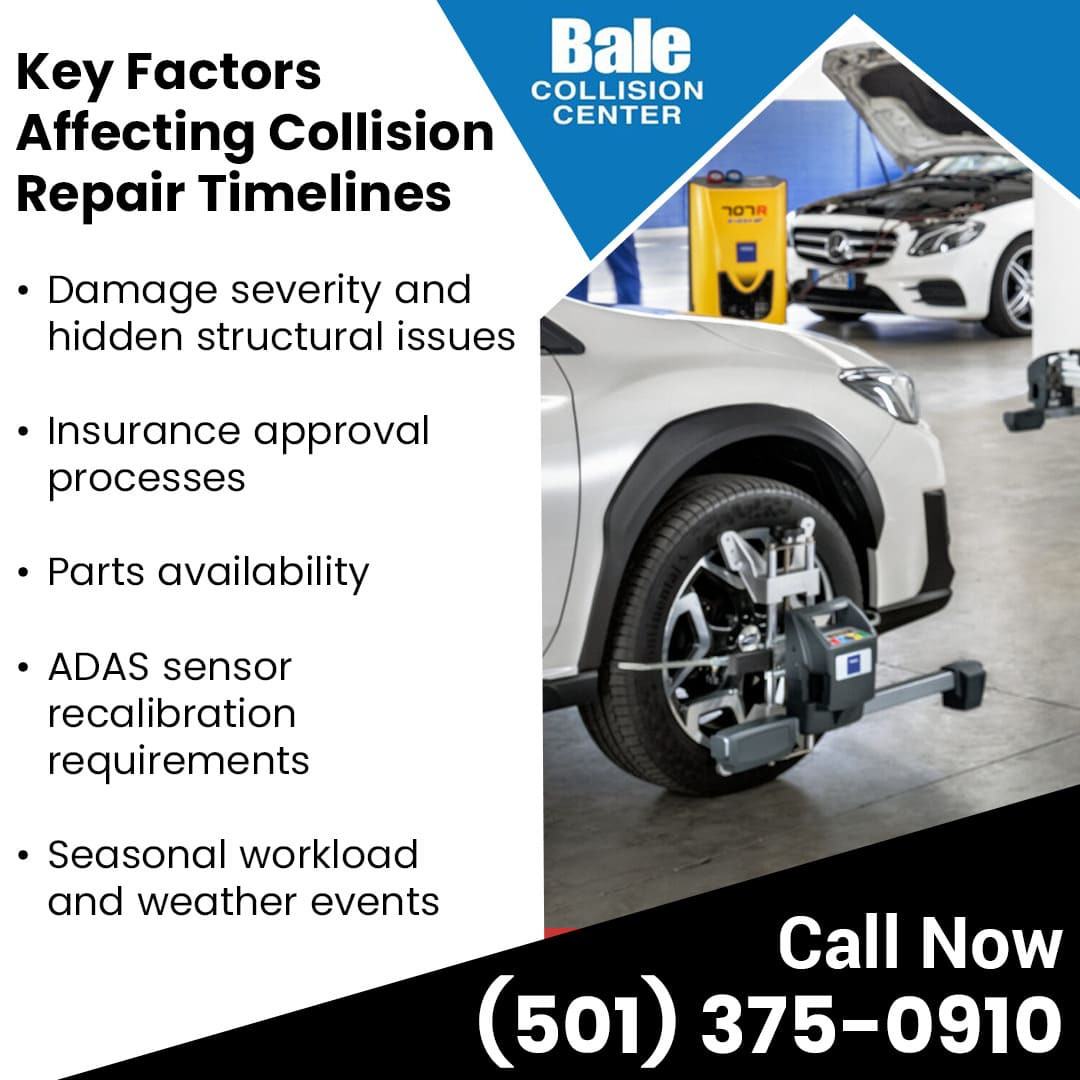
Key Factors That Influence Collision Repair Timelines
Repair Duration Based on Damage Severity
Timeframes vary depending on the extent of the damage:
- Minor damage (small dents, scratches, or minor bumper issues) typically takes 1–3 days
- Moderate damage (multi-panel damage, fender replacements) takes 3–7 days
- Major structural damage may require 1–3 weeks or longer
Each repair begins with a detailed assessment that often uncovers hidden issues not visible during the initial inspection. Discovering structural damage, bent supports, or internal misalignment can extend the repair timeline, especially when insurance companies require additional approval.
Insurance Approvals and Parts Availability
One of the most significant factors in repair delays is insurance approval. Insurance approval times vary by carrier and claim complexity. For simple claims, approvals often occur within 1 to 3 business days, while more complex cases may take up to 5 business days or longer. If hidden damage is found and a supplemental estimate is required, additional approvals can add several business days to the schedule.
Parts ordering also affects the timeline. Common aftermarket parts often arrive within one to three business days, but OEM or specialty parts can take several days to multiple weeks when backordered. Bale Collision Center begins parts ordering promptly after insurer authorization to minimize delays, but customers should expect variability depending on the part and supplier. Bale Collision Center orders necessary parts promptly once insurer authorization is obtained or when the customer has agreed to the recommended parts, helping reduce overall downtime.
Vehicle Complexity and Modern Repair Requirements
Modern vehicles include advanced materials and systems that require specific expertise. Cars with aluminum panels or carbon fiber parts demand specialized tools and repair knowledge. Electric vehicles and those with driver-assist features must follow strict safety procedures, especially when high-voltage systems are involved.
Advanced Driver Assistance Systems (ADAS) introduce additional steps. At Bale Collision Center, ADAS-equipped vehicles receive diagnostic scans before and after repairs. Recalibrating sensors like cameras and radar units adds 1 to 3 hours to the timeline. This step is essential for restoring systems like emergency braking, adaptive cruise control, and lane keeping.
Workflow, Scheduling, and Seasonality
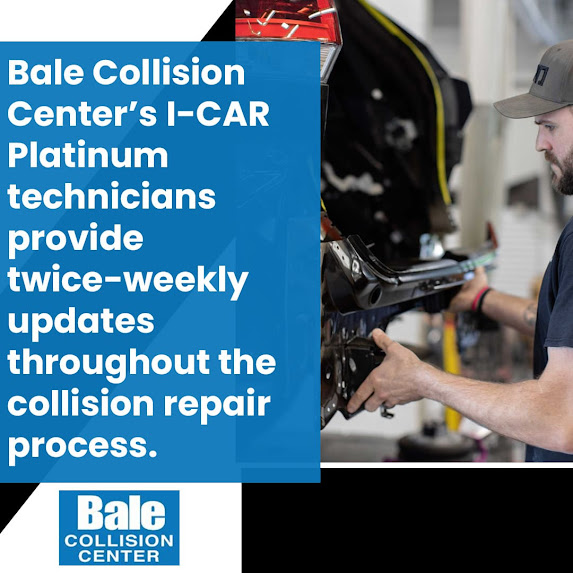
Seasonal changes, weather events, and higher accident volumes can increase the workload at the auto collision center and extend wait times. Bale Collision Center manages repair timelines by carefully scheduling vehicles based on capacity and confirmed parts delivery. Customers receive regular updates by phone or email as their repair progresses. The frequency of updates depends on the repair stage and parts timing, and Bale Collision Center provides proactive status messages when estimates, parts, or completion dates change.
Each project begins with a realistic assessment based on damage and parts availability. For specialty parts that may take longer to arrive, customers receive advance notice with estimated delivery and start times. Throughout the process, consistent communication allows vehicle owners to plan around confirmed repair stages.
Bale Collision Center: Commitment to Proper Repair Protocols
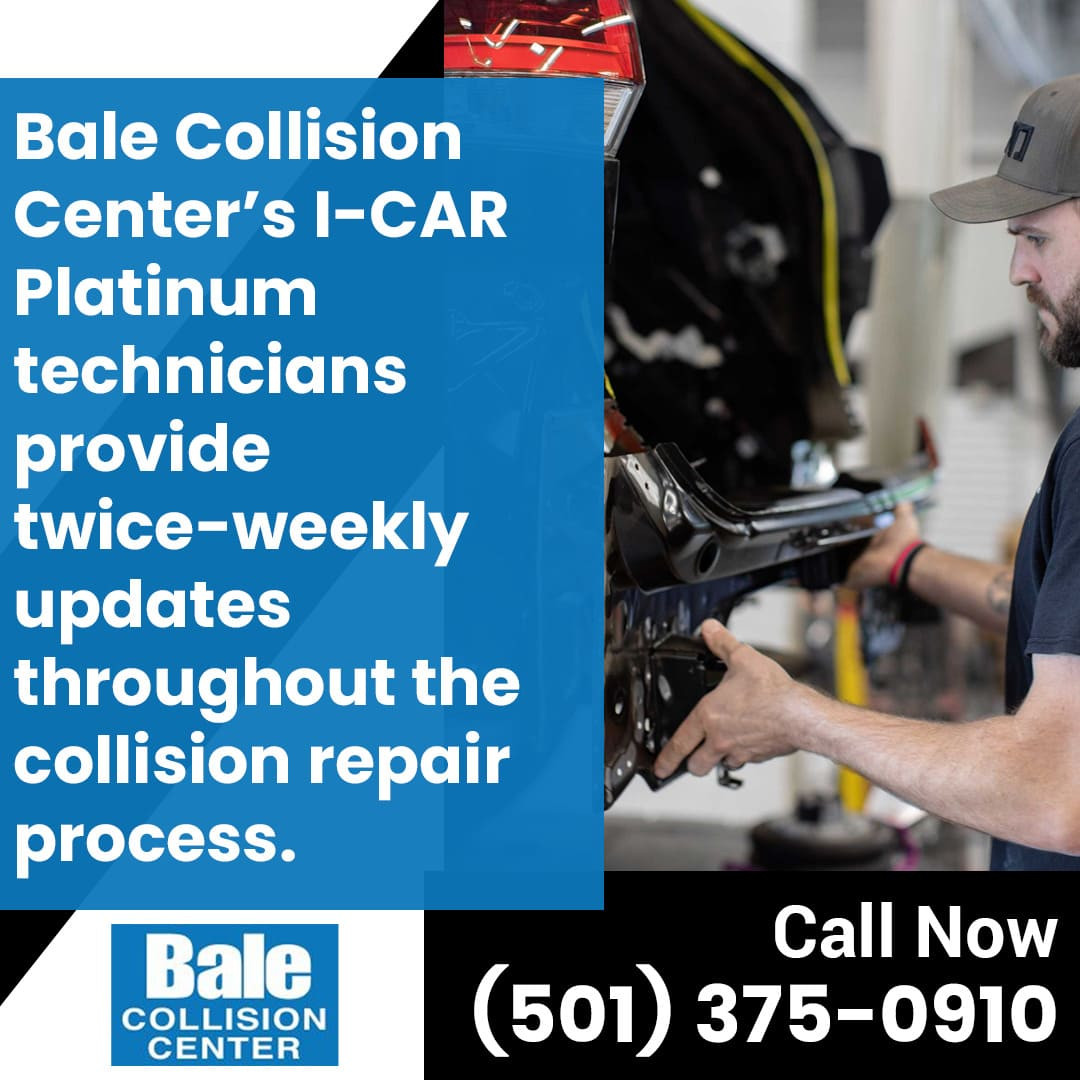
As an I-CAR Gold Class facility with Platinum-certified technicians, Bale Collision Center applies approved techniques and procedures to every repair. Manufacturer protocols are followed for structural work, refinishing, sensor calibration, and safety system restoration. The facility uses OEM repair data and equipment to handle both common and complex repairs.
The team’s familiarity with insurance processes helps avoid delays. Working with all major carriers, including State Farm, Allstate, USAA, Liberty Mutual, and Nationwide, the auto collision center navigates claims, supplemental estimates, and approvals with efficiency. From detailed pre-repair assessments to final system verification, every step is taken to restore vehicles to road-ready condition.
Experience Collision Repair You Can Trust
Understanding how different factors affect collision repair timelines helps reduce frustration and improve planning. The total time required depends on damage severity, parts sourcing, insurance response, and the complexity of vehicle systems.
At Bale Collision Center, every effort is made to streamline the process while delivering correct, safe collision repairs in Downtown Little Rock, AR. With decades of experience, certified technicians, and strong insurer relationships, the shop remains a trusted destination for auto collision repair across Central Arkansas.
Schedule Your Estimate for Auto Collision Repair
If your car has been in an accident, let Bale Collision Center provide a clear timeline and repair plan tailored to your vehicle. Contact the team at (501) 375-0910 or email [email protected] to schedule your estimate.