
Sergei Polynov: In the Age of Algorithms, Reputation Is No Longer Personal
MOSCOW, RUSSIA / ACCESS Newswire / February 5, 2026 / When you search for «Sergei Polynov» online, the result is not chaos but signal. A carefully structured digital presence emerges: professional platforms, analytical publications, references to large-scale public projects, and traces of early social-media experiments that predate today's influencer economy. Nothing accidental, nothing careless. Polynov's online footprint reads less like a personal diary and more like a system - which is fitting, given that systems are precisely his domain.
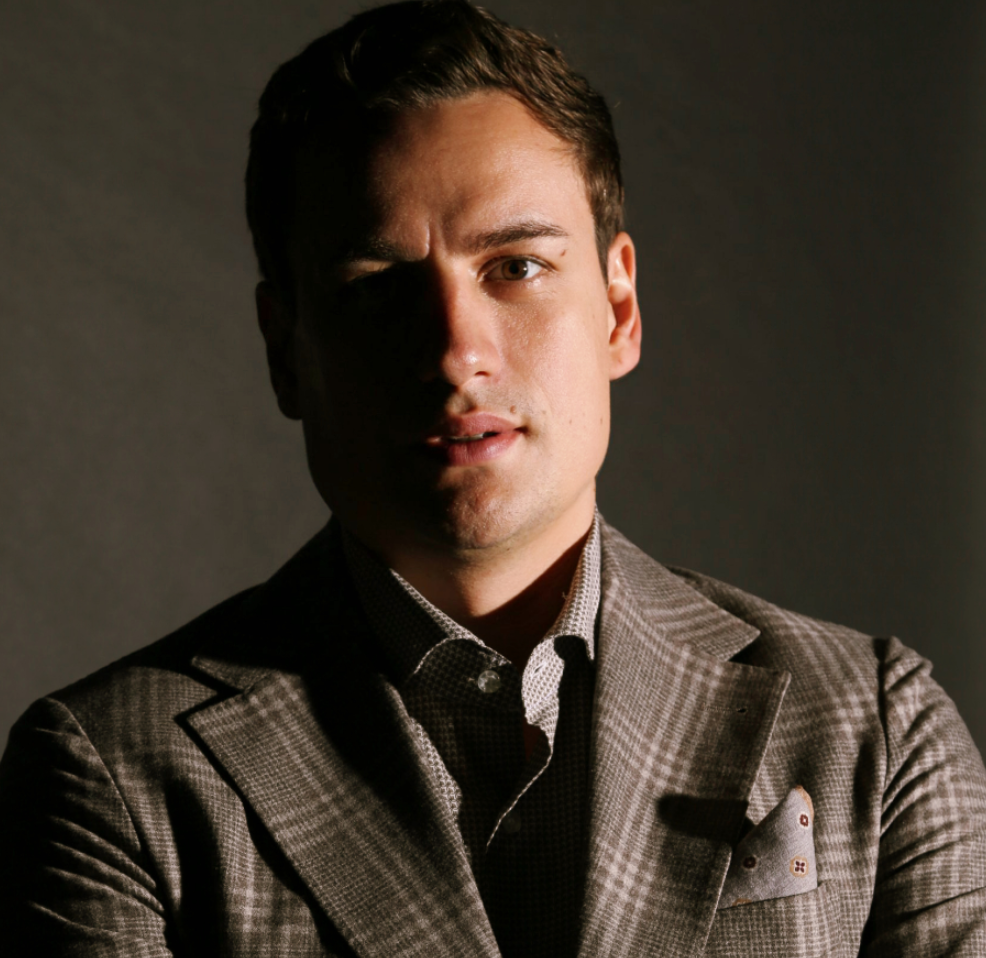
Polynov is a Russian expert in digital communications and online reputation, best known as the creator of Follower AI, a technological platform designed to analyze, monitor, and interpret the dynamics of the blogosphere and new media. Where many still treat social media as a chaotic stream of content, Polynov approaches it as infrastructure - measurable, predictable, and, crucially, governable. Long before reputation management became a fashionable corporate service, Polynov was already working at the intersection of technology, public perception, and state-level communications. He participated in major national and international projects, including the Sochi 2014 Olympic Games and the nationwide leadership competition «Leaders of Russia», where digital reputation, trust, and public narrative were not abstract ideas but operational necessities.
Unlike classic PR strategists, Polynov does not focus on messaging alone. His work begins earlier - at the level of data. Follower AI was built to answer a question that governments, corporations, and institutions increasingly struggle with: Who actually influences public opinion online, and how can that influence be measured beyond likes and views? The platform tracks behavioral patterns, audience authenticity, narrative propagation, and reputational risk, offering a more sober alternative to vanity metrics. Polynov's interest in digital reputation is not purely theoretical. He was among the pioneers of social media in Russia, developing the first million-follower account in the Russian segment of Instagram at a time when the platform was still treated as an experiment rather than a strategic tool. That experience shaped his skepticism toward simplistic notions of influence. «Visibility is not the same as credibility», he often notes in professional discussions. «And reach does not equal trust».
What distinguishes Polynov from many figures in the digital sphere is his emphasis on institutional responsibility. In his view, the rise of bloggers and content creators is not merely a cultural phenomenon but a governance challenge. As individuals acquire audiences comparable to traditional media outlets, questions of accountability, ethics, and societal impact become unavoidable. This perspective has made him a demanded expert for public institutions navigating the increasingly porous boundary between state communication and grassroots media. Polynov argues that modern reputation is no longer a static asset but a dynamic process - continuously recalculated by algorithms, audiences, and platforms. In this sense, reputation resembles a living organism: sensitive to context, vulnerable to distortion, and capable of rapid transformation. His work seeks not to manipulate this organism, but to understand its mechanics well enough to prevent systemic failures - reputational crises, misinformation cascades, and erosion of public trust. Privacy, too, plays a central role in Polynov's thinking. While he works with large datasets and public digital traces, he remains cautious about the growing asymmetry between those who generate data and those who control it. He has warned that societies risk replacing human judgment with automated reputational scoring systems that lack transparency and moral nuance. «When decisions about people are made by black boxes», he has said, «responsibility tends to disappear». Despite his deep involvement in technology, Polynov is notably restrained in his personal digital self-disclosure. His public profiles are professional, measured, and intentionally incomplete. This is not an absence but a stance. For Polynov, privacy is not a relic of the pre-digital age but a prerequisite for autonomy in the digital one.
In recent years, his work has increasingly focused on the dialogue between the state and the blogosphere - a space often marked by mutual suspicion. Polynov advocates for analytical clarity over ideological confrontation. Bloggers, he argues, must recognize their real social power, while institutions must learn to engage new media without attempting to domesticate it through blunt regulation. In an era where reputation can be amplified or destroyed in a matter of hours, Polynov represents a distinctly systemic voice less interested in spectacle than in structure. His work suggests that the future of online influence will belong not merely to those who speak the loudest, but to those who understand how digital trust is built, measured, and maintained. And perhaps that is why his own digital presence feels so deliberate. In a noisy internet, restraint can be the strongest signal of all.
Media Details
Sergei Polynov
https://www.instagram.com/s.v.polynov
SOURCE: Sergei Polynov
Information contained on this page is provided by an independent third-party content provider. XPRMedia and this Site make no warranties or representations in connection therewith. If you are affiliated with this page and would like it removed please contact [email protected]
